
How Much Does Control4 Cost in Canada?
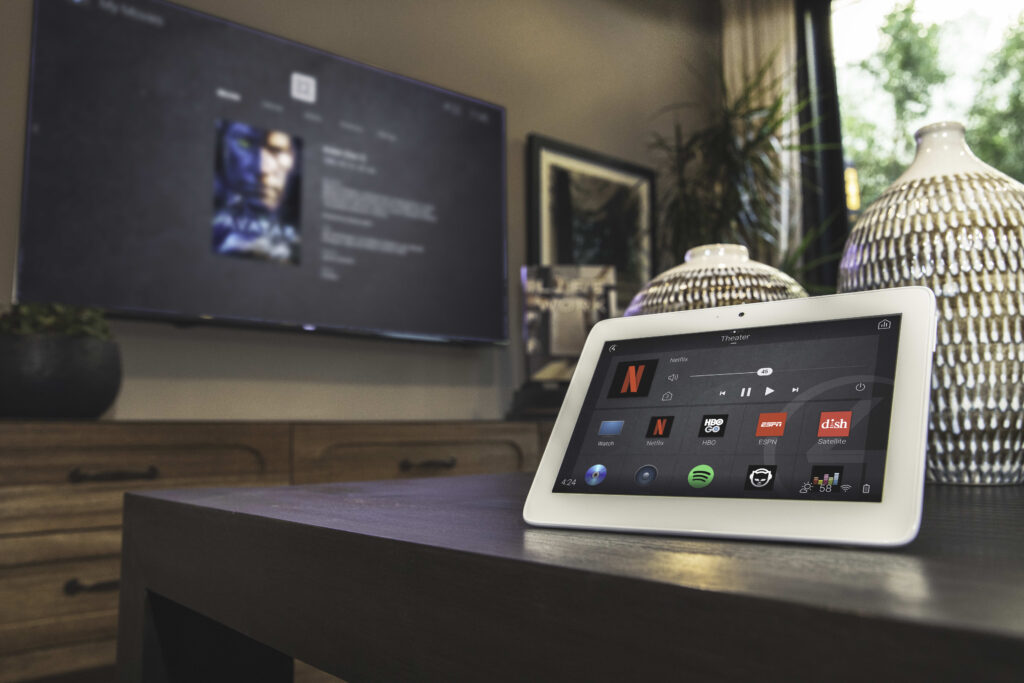
A Control4 system in Canada is not one price — it is priced by scope, depending on how many rooms you automate and how much you ask it to control. A single-room lighting-and-audio setup is a small footprint. A whole-home system tying together lighting, AV, shades, security and networking is a much larger one. The honest answer is that scope sets the price, and this article breaks down exactly what moves it.
Below you will find the real factors that drive cost and a clear explanation of why a professionally designed system is priced differently from an off-the-shelf kit. Rather than quote a number that can’t hold true for every home, we walk through what actually moves the price — so a consultation can give you a real figure for your project instead of false precision.
What drives the cost of a Control4 system?
Control4 is a platform, not a product with a sticker price. What you pay is the sum of three things: the hardware (controllers, keypads, dimmers, touchscreens, sensors, speakers, network gear), the design and programming labour to make it all work as one system, and the ongoing support you choose afterward.
Two homes of the same size can differ by a wide margin. A home that only wants smart lighting and a unified remote sits at the low end. A home that wants lighting, whole-home audio, motorized shades, a home theatre, cameras and a rock-solid network sits much higher — because there is simply more hardware and more programming involved.
The biggest single lever is scope: what you want the system to do. The second is whether you are wiring a new build or retrofitting a finished home. Everything else refines the number from there.
What affects your Control4 price
Use this table to see where the money goes before you ever get a quote. It is also the fastest way to understand why two quotes can look so different — they are usually quoting different scopes.
| Factor | What it means | Effect on price |
|---|---|---|
| Number of rooms | How many spaces get keypads, control, audio or screens | More rooms = more hardware and programming; the main cost multiplier |
| Number and type of devices | Dimmers, keypads, thermostats, locks, cameras, shades, speakers | Each device adds hardware and integration time |
| Scope of control | Lighting only vs. full AV + security + shades + climate | Broader scope raises price the most after room count |
| Retrofit vs. new-build prewire | Pulling wire in a finished home vs. wiring during construction | Retrofit adds labour and access work; prewiring is cheaper per point |
| Network foundation | Business-grade router, switches, access points | A must for reliability; adds cost but prevents the “it drops out” problem |
| Controller tier | Entry controller vs. a higher-capacity model | Larger, more complex systems need a more capable (pricier) controller |
| Touchscreens & interfaces | In-wall touchscreens, remotes, keypads, app-only | Touchscreens are premium; app-and-keypad control costs less |
| Motorized shades | Number of windows and motor type | Often a large line item — shades scale fast with window count |
| Ongoing support | Warranty, remote support, service plan | An operating cost, not a one-time cost — worth planning for |
How is a Control4 system priced in Canada?
Scope is the only honest way to talk about this, because the same platform serves a one-room setup and a whole-estate system. The tiers below describe what changes as a system grows — not fixed prices. Every one of them is priced by scope, and your real number comes from a design conversation about your specific home.
- Starter / single-room setup (smart lighting plus a unified remote or one room of audio-video): the smallest, most affordable footprint — priced by the handful of devices and the programming involved.
- Multi-room system (lighting and audio across the main living spaces, a few keypads, a proper network): priced by the number of rooms, devices and the network foundation it sits on.
- Whole-home system (lighting, whole-home audio, shades, a theatre or media room, cameras, climate and a business-grade network across the house): the largest scope — priced by the rooms, device count, storage, cabling and programming, and larger custom homes go further still.
In every tier the price is set by scope — rooms, cameras and control points, cabling, storage and programming. That’s exactly why a consultation, not a price list, gives you a real number for your project.
Two costs people forget to budget for: the network foundation (a reliable router, switches and access points — the thing everything else depends on) and ongoing support after the install. A wireless kit hides these; a serious system accounts for them up front.
For a deeper look at where automation dollars go beyond the platform itself, our guide on when a simple DIY smart home is enough versus when it isn’t is a useful companion read.
How much does home automation cost in general?
“Home automation” is a broad term, and the cost swings enormously with what you mean by it. A handful of smart plugs and a voice speaker is a weekend project with a small, off-the-shelf price. A single-app system that controls your lights, blinds, entertainment, cameras and thermostat from one interface — reliably, for years — is a professionally installed project priced by its scope.
The confusion usually comes from comparing those two things as if they are the same. They are not. Cheap smart gadgets solve one task each and rarely talk to one another. A platform like Control4 exists to make everything behave as one system, which is where the design and programming cost comes from — and where the value shows up day to day.
Why does a dealer-designed system cost more than a boxed kit?
You can buy a box of smart-home gear online for a fraction of a Control4 quote. So why does a designed system cost more? Because you are not just paying for hardware — you are paying for the parts a box does not include.
- Design. Someone maps your home, your habits and your wiring into a system that actually fits, so devices are placed and sized correctly rather than guessed at.
- Programming. Scenes, schedules and one-touch actions (“Goodnight” turns off lights, arms the alarm, drops the shades) are custom-built, not left for you to wire together.
- A single interface. One app and one remote run everything, instead of five apps that each control one brand.
- Reliability. A properly specified network and professional integration are the difference between “it works” and “it works every day for years.”
- Support and warranty. When something needs attention, there is a dealer to call — not a support forum. Control4 is sold and serviced through authorized dealers for exactly this reason.
As an Authorized Control4 Dealer, we design and program the system around your home rather than handing you a box and wishing you luck. That design-and-support layer is most of what separates a quote from a kit — and most of what determines whether you still love the system in year three.
When you honestly don’t need Control4 (and when you do)
Here is the part most integrators skip. If your needs are simple, a DIY setup is genuinely fine. Renting an apartment, or you just want a smart speaker, a few smart bulbs and an app to check a doorbell camera? Buy the off-the-shelf gear, save your money, and skip a designed system entirely. There is no shame in that — it is the right call.
DIY also holds up well when you are comfortable being your own tech support, you do not mind juggling a few separate apps, and nothing you are automating is mission-critical.
Control4 earns its cost when the scope gets past what consumer gear does gracefully. That usually means several rooms, multiple systems that need to work together (lighting plus AV plus shades plus security), a want for one interface instead of many, and — importantly — a want for it to just work without you maintaining it. New builds and major renovations are the clearest case, because prewiring during construction is far cheaper than retrofitting later, and you get to design the whole thing correctly from the start.
A good test: if you find yourself opening three apps to get one room the way you want it, or you are wiring up a home where reliability and a clean single interface matter, that is the line where a designed system starts paying for itself. If you are inheriting a system from a previous owner rather than building fresh, our guide to taking over an existing Control4 system walks through what that costs and involves.
Frequently asked questions
How much does a Control4 system cost in Canada?
It depends almost entirely on scope. A single-room lighting-and-remote setup is a modest footprint of hardware and programming, while a whole-home system covering lighting, audio, shades, security and networking is a much larger project. Both are priced by scope — rooms, cameras and control points, cabling, storage and programming — so the honest number comes from a design conversation about your specific home, not a fixed price list.
Is Control4 worth it compared to Alexa or Google Home?
For simple, single-room needs, Alexa or Google are cheaper and perfectly good. Control4 becomes worth it when you want multiple systems — lighting, AV, shades, security — working together through one reliable interface, with professional design and support behind it. It is a different tool for a different job, not a more expensive version of the same thing.
What are the ongoing costs of Control4?
The system itself has no mandatory monthly subscription to operate day to day. Ongoing costs are optional support or service plans, and eventual hardware upgrades as your needs grow. Budget for a support relationship with your dealer rather than assuming zero cost after install — it is what keeps the system healthy over time.
Can I add to a Control4 system later?
Yes — that is one of its strengths. You can start with lighting and a network, then add audio, shades, cameras or a theatre over time. This is why the initial design matters so much: a well-planned foundation (especially the network and wiring) makes future additions straightforward instead of a rebuild.
Does Control4 include alarm monitoring?
Control4 can integrate with security devices as part of the system, but monitoring is separate. Monitoring options can be arranged depending on the property and requirements — we’ll cover this during your consultation. We never bundle monitoring into a price without that conversation first.
Why is a professional Control4 quote higher than gear I find online?
The hardware is only part of a quote. You are also paying for the design that fits the system to your home, the programming that makes scenes and one-touch control work, a properly built network for reliability, and a dealer to call for support and warranty. A box of parts includes none of that, which is exactly why the day-to-day experience differs.
When you’re ready to turn that plan into a real design, our team as an Authorized Control4 Dealer serving Brampton and the GTA can scope it with you honestly — including where you genuinely don’t need us.
Ready to plan your project?
Tell us what you want to build, fix or upgrade — a Techspirit Solutions specialist will help.